
Huon Valley has placed second in two of three categories in the Southern Tasmania Biodiversity Blitz, a friendly regional contest that saw 11 southern councils compete to record the most plant, animal and fungi species in two weeks.
From 15 to 30 September, 78 Huon Valley observers headed into backyards, bushland and waterways to photograph and upload what they found to iNaturalist. Their efforts delivered 1,027 research grade observations and 332 research grade species, second only to Kingborough in both categories. Huon Valley also placed third for the number of participants.
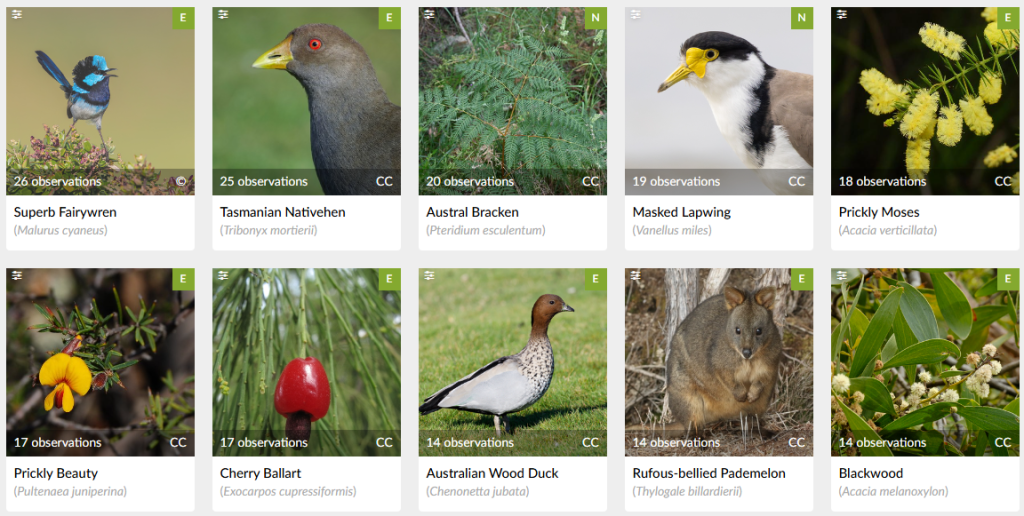
The most-observed species in the Huon was a tie between two familiar locals: the superb fairy-wren and the Tasmanian native hen.
Across the southern region, 418 observers logged 10,347 observations covering 1,510 species. More than half of those observations (5,905) reached research grade, meaning the identification has been confirmed by the iNaturalist community. Plants were the most recorded group, with 781 species, followed by insects (280), birds (115) and fungi (81).
Why it matters
Every research grade observation becomes part of a public scientific record. Researchers, land managers and councils use this data to understand which species live where, track changes over time, and spot threatened or invasive species early. The more people who take part, the clearer the picture of our local environment becomes.
A huge thank you to everyone who took part and helped put the Huon Valley’s biodiversity on the map.
Results
Most research grade observations: 1st Kingborough (1,739), 2nd Huon Valley (1,027), 3rd Tasman (982)
Most research grade species: 1st Kingborough (449), 2nd Huon Valley (332), 3rd Clarence (309)
Most participants: 1st Hobart (109), 2nd Kingborough (105), 3rd Huon Valley (78)
Keep exploring
If you caught the citizen science bug, there are two more chances to get involved this month:
- Bugs in My Backyard Week, 16 to 22 November, run by the Invasive Species Council
- Great Southern Bioblitz, 27 to 30 November, recording biodiversity across the whole Southern Hemisphere