
Karamu (Coprosma robusta) is a New Zealand native introduced to Australia as a nursery plant in the late 1800s. Since then, it has established itself in a handful of sites in Tasmania, where it poses a serious threat due to its ability to invade undisturbed native forest — something few other weeds are capable of doing.
In the Huon Valley, karamu threatens a range of lowland forest types, coastal vegetation, and especially riverside areas, where it forms dense stands that outcompete all other plants.
Karamu is listed as a Zone A weed for our region, meaning our management aim is eradication. Annual karamu surveys are undertaken by our NRM team to determine the current extent of karamu and the effectiveness of management efforts across the Huon Valley. Reports from the public are key to finding new plants before they spread further.
Why is karamu a problem?
Karamu poses serious risks to the environment and native vegetation:
- Invades undisturbed native forest — Unlike many weeds, karamu is capable of establishing in intact, healthy bushland, not just disturbed or degraded sites.
- Forms dense stands — Karamu grows vigorously and forms thick stands that shade out and outcompete all other plants, including native species.
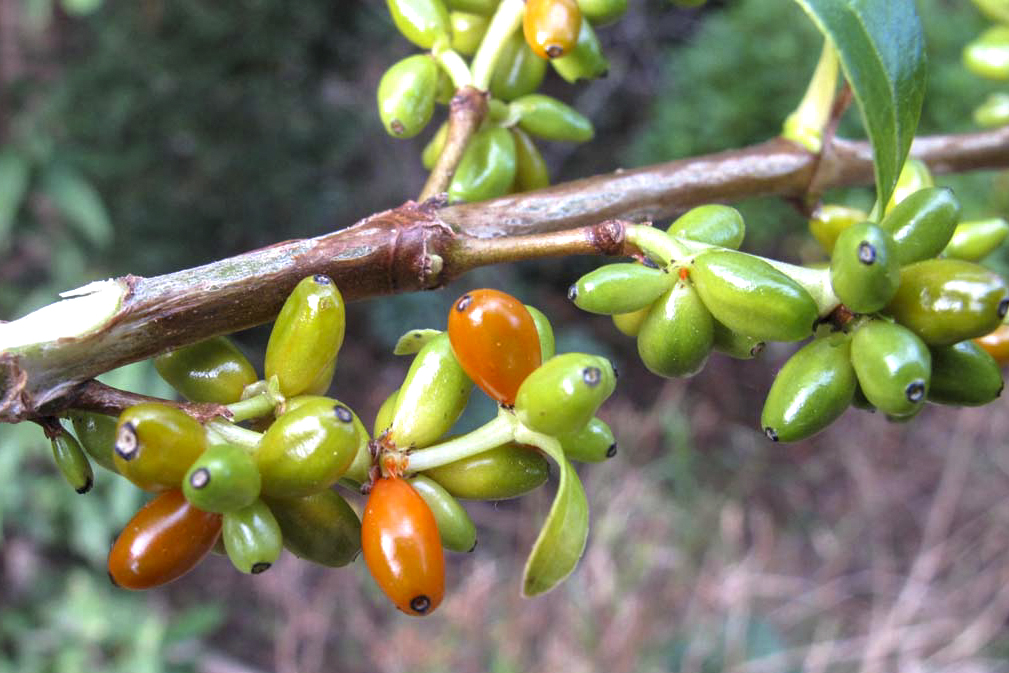
- Spread by birds — Its fleshy yellow-to-orange fruits are eaten and spread by birds, allowing karamu to establish at new sites far from existing infestations.
- Threatens priority habitats — Lowland forests, coastal vegetation, and riverside areas in the Huon Valley are all at risk from karamu invasion.
How to identify karamu
Karamu can be confused with other shrubs, including some native species. Look for the following key features:
- Size: A shrub or small tree growing up to 6 metres tall.
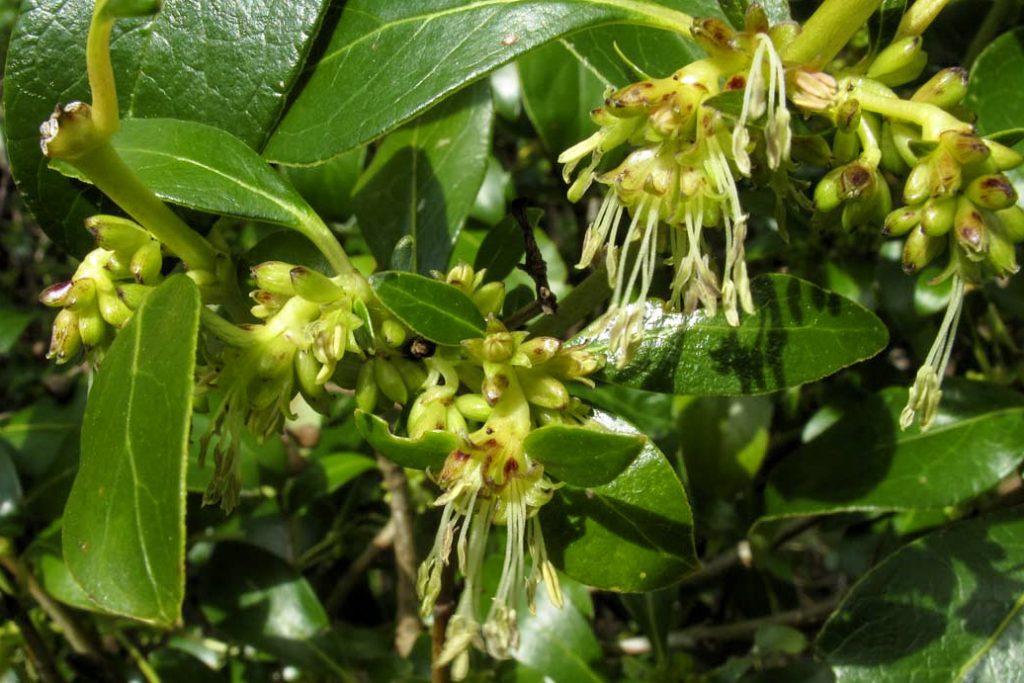
- Leaves: Dark green, oval-shaped with pointed tips, arranged in opposite pairs along branchlets.
- Flowers: Small and inconspicuous — easy to overlook.
- Fruit: Yellow-to-orange fleshy fruits that begin to appear toward the end of summer. These are eaten and spread by birds.
- Similar species: Karamu may be confused with mirror bush (Coprosma repens), which looks very similar but has rounder leaves without pointed tips.
We need your help
We need your help to eradicate karamu from the Huon Valley. Information on weed management, including developing your own weed management plan, can be found on Council’s website at www.huonvalley.tas.gov.au
Report sightings immediately
If you think you have seen karamu, please contact the Huon Valley Council’s Natural Resource Management Unit on (03) 6264 0300 or email nrm@huonvalley.tas.gov.au. Sending a photo with your report is especially helpful. Early detection and rapid response are essential to preventing this serious weed from spreading further across the region.