
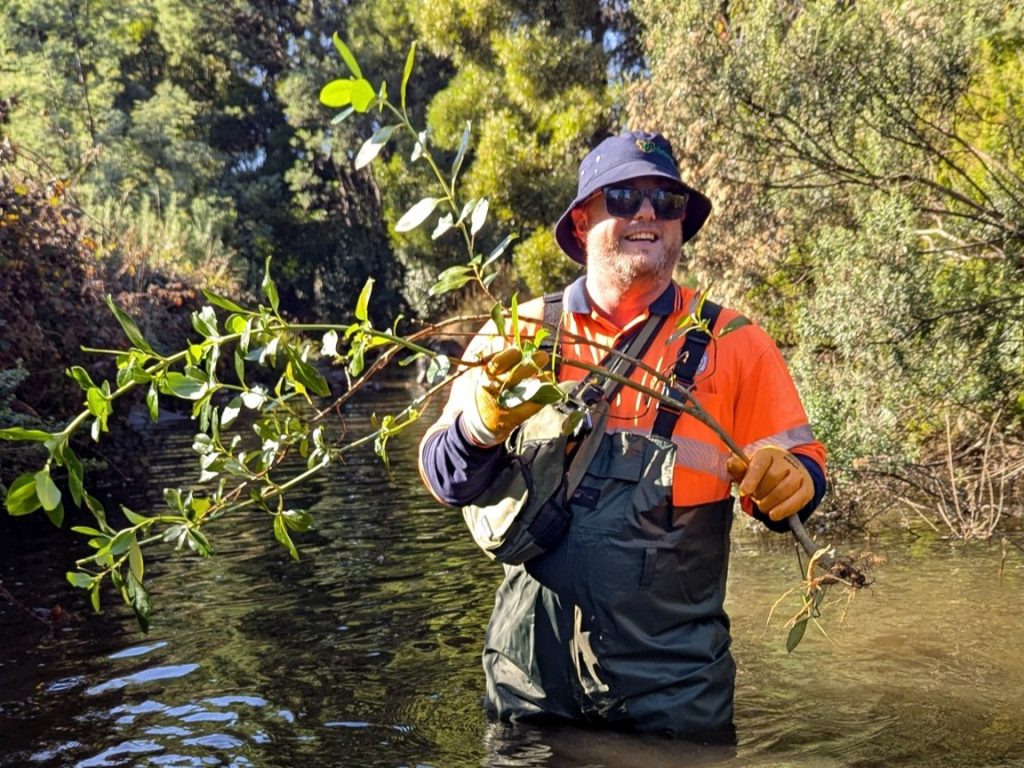
Huon Valley Council’s Natural Resource Management team has completed its latest survey along the Kermandie River, recording and treating 148 karamu plants in a three-day operation that signals continued progress in a decade-long eradication effort.
This World Environment Day, Huon Valley Council is shining a light on the quiet, unglamorous work happening on the ground — and the results speak for themselves.
Council’s team recently wrapped up karamu (Coprosma robusta) surveys near Geeveston, covering more than four kilometres of river across multiple survey days this season.
Karamu is considered a high-priority weed in Tasmania, currently established in only three locations statewide — Fern Tree, the Derwent Valley, and Geeveston. The sprawling shrub poses a serious threat to riverbanks and wet forest environments, where it can rapidly dominate vegetation and cause lasting ecological damage.
Council’s eradication program along the Kermandie River launched in 2020 with support from the Tasmanian Government’s Tasmanian Weeds Action Fund, and the transformation since then has been striking. What were once dense hedges of mature karamu trees have been reduced to small, scattered seedlings.
Despite the encouraging progress, Council warns the work is far from over. Because new plants can regenerate from tiny root fragments left in the soil, monitoring and treatment will need to continue for at least the next decade.
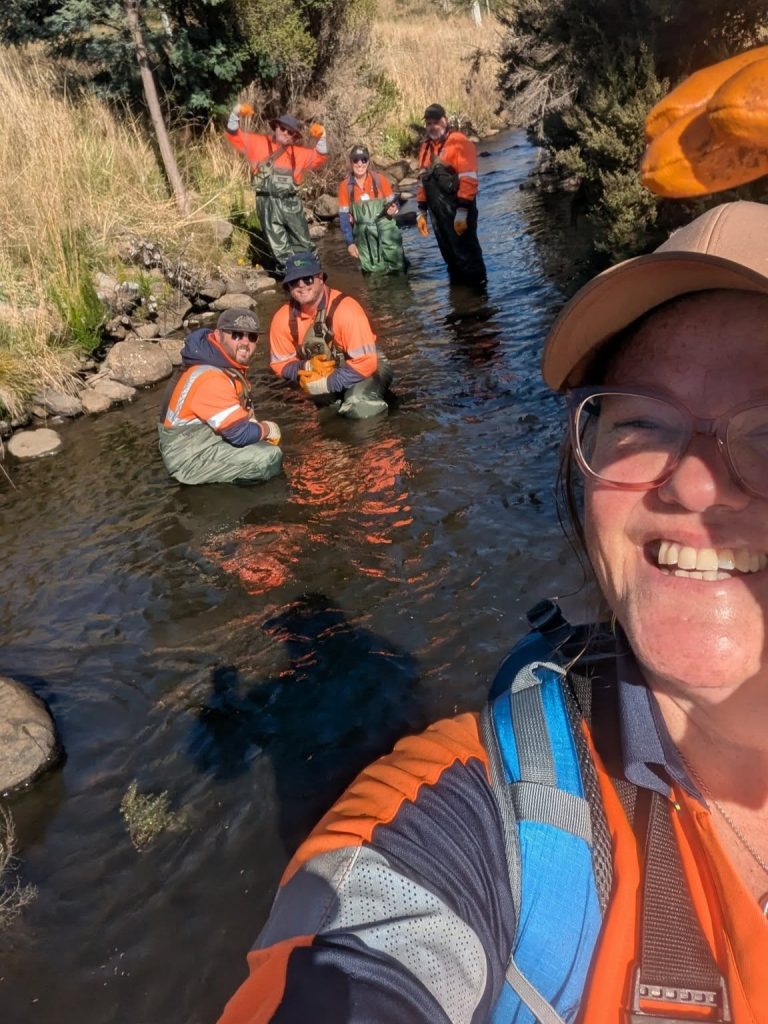
Council also thanks volunteer Seth from Bushlinks Landcare, who lent a hand during the latest survey effort.
Have You Seen Karamu?
Community members play an important role in the early detection of invasive weeds. Residents who believe they may have spotted karamu are urged to report it to Council’s NRM Unit — every sighting counts.
Reports can be submitted at: www.huonvalley.tas.gov.au/have-you-seen-it-karamu