

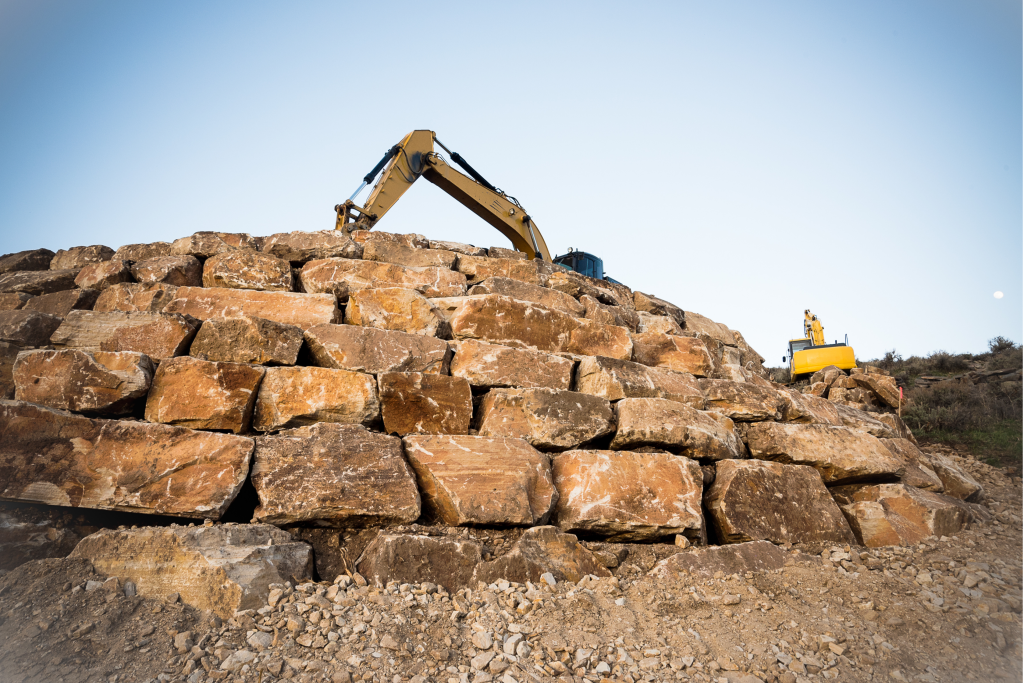
Huon Valley Council is urging coastal property owners, builders, and contractors to obtain all required approvals before undertaking coastal protection works such as seawalls, rock walls, and retaining walls.
Recent enforcement action involving an unauthorised seawall construction in the Huon Valley has highlighted the need for greater community awareness. Under the Building Act 2016 and the Tasmanian Planning Scheme, coastal protection works in hazard areas require both planning and building approval before construction begins.
While the desire to act quickly to protect your home and assets is completely understandable, without proper engineering assessment and approval, structures can redirect wave energy onto neighbouring properties and accelerate the very erosion they were intended to stop. Penalties for non-compliant works can reach up to 100 penalty units for individuals and 500 penalty units for body corporates, with both property owners and contractors liable.
Property owners are also reminded that most coastal properties adjoin Crown foreshore. Works extending onto Crown land require separate approvals from the relevant Crown land manager in addition to Council approvals. Undertaking works on Crown land without authorisation may breach the Crown Lands Act 1976.
To help residents better understand their obligations before they build, Council has developed a dedicated Coastal Protection Works — Know Before You Build webpage. The page includes a step-by-step checklist for planning and building approvals, answers to frequently asked questions, and practical guidance to help property owners, builders, and contractors navigate this complex area of planning law. It is designed to be the first stop for anyone considering coastal protection works in the Huon Valley.
Council recognises these are complex, stressful situations and is committed to helping the community navigate them. As a core partner in the Tasmanian Coastal Hazard Resilience Planning Project — a $1 million initiative running from 2026 to 2029 — Council is working alongside 15 other Tasmanian coastal councils to deliver better coastal hazard mapping, stronger community education, and improved tools for long-term adaptation planning. Funded jointly by the Commonwealth Disaster Ready Fund, the Tasmanian Government through ReCFIT, and local councils, this project represents the most significant coordinated investment in coastal resilience planning Tasmania has seen.
Property owners can check their coastal hazard risk on the LIST map at thelist.tas.gov.au and are encouraged to visit Council’s new Know Before You Build webpage or contact Council directly before commencing any works.